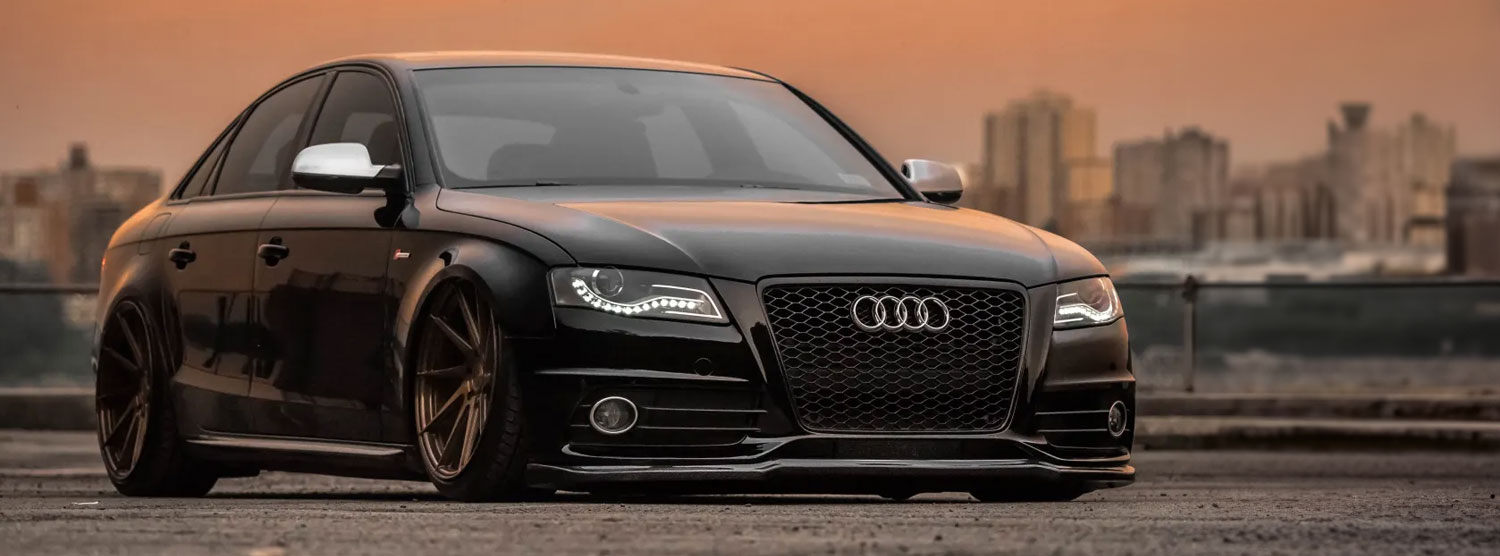
About Audi Wheel Production Methods The development of Audi Wheels has evolved over the years as well as the materials used. Wheels can be broken down into two different categories (single piece wheels and multi piece wheels). There are several methods used in order to develop wheels; gravity casting, low-pressure casting, tilt die-casting, and forging. The casting technique is the most mainstream method of wheel production. Casting involves a basic concept of creating molten aluminum and pouring it into a wheel cast. Below are a few different technique used for casting.
Gravity Cast Audi Wheels Gravity casting is the most popular method of manufacturing wheels and is often the most inexpensive. During the process Gravity Casting, hot molten aluminum is poured into a wheel cast and is shaped by gravity within the mold. The force of gravity pulls the molten aluminum and creates a specifically designed wheel. However, during this process, air pockets may likely develop which can lead to stress cracks and pitting. In order minimize air pockets, additional molten aluminum must be added in order to reinforce the strength of the wheel. The addition of molten aluminum leads to a heavier weight but a visually appealing rim.
Low Pressure Cast Audi Wheels Uses a similar method to Gravity Casting but the aluminum is under forced into the mold faster. This results in less air pockets and an overall higher quality wheel with minimized weight. In addition to the Low Pressure Cast method, a high pressure method is also used. This method is more efficient procedure then the Low Pressure because it fills the mold even faster. The rate at which the molten aluminum is forced into the cast has a direct affect on the quality of the Rim. Because of the added pressure, high Pressure Rims are typically lighter and stronger.
Multi-Piece Audi Wheels These wheels are constructed using two or three parts that are assembled together. The pieces are often forged from blocks of aluminum. Three piece wheels offer multiple benefits such as greater capacity of customization and facilitated replacement of damaged portions of the wheel. The most popular multi piece wheels are often produced for wheels larger than 18''.
Forged Audi Wheels Are exposed to pressures of 8,000 to 10,000 tons which creates a very light weight wheel with unmatched strength and quality. Similar to forged and pressure casting, semi solid forging melts billet alloy into a semi liquid material. The material is then forced into a mold with high pressure. The end result is a quality wheel similar to a forged wheel without the price tag.
|